Dehnfolienersatz im Warenstapel-Transport / Stretch film substitute - in goods stack transport
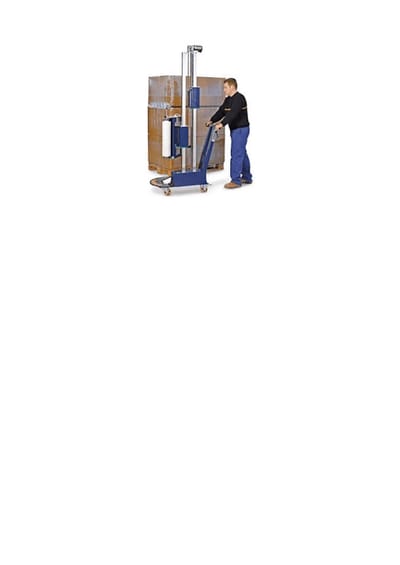
D e h n f o l i e r e r s a t z im Warenstapeltransport
Ausgangslage – das Problem
Ob empfindliches Obst oder schwere Industriebauteile:Warenstapel auf Paletten werden heute fast ausnahmslos mit Dehnfolie gesichert. Dafür werden pro Palette oft 30 Meter Folie oder mehr benötigt – mehrlagig, einmalig, nicht wiederverwendbar.
Die Folgen:
- enorme Mengen Kunststoffabfall
- hoher Zeit- und Arbeitsaufwand
- zusätzliche Kosten für Folien, Entsorgung und Wickelmaschinen
- zunehmende Umweltbelastung durch Mikroplastik
Muss Palettensicherung weiterhin zwangsläufig auf Einweg-Dehnfolie basieren?
Das erfinderisch Neue – die Lösung
Aus der Motivation heraus, dieses System grundlegend zu verbessern, entstand die Idee einer mehrfach wiederverwendbaren, anspannbaren Ummantelung als Ersatz für Dehnfolie.
Diese Vorrichtung fixiert Warenstapel zuverlässig:
- gegen Verrutschen
- gegen Auseinanderfallen
- für Straßen-, Luft- und Seetransport
Die Ummantelung besteht aus:
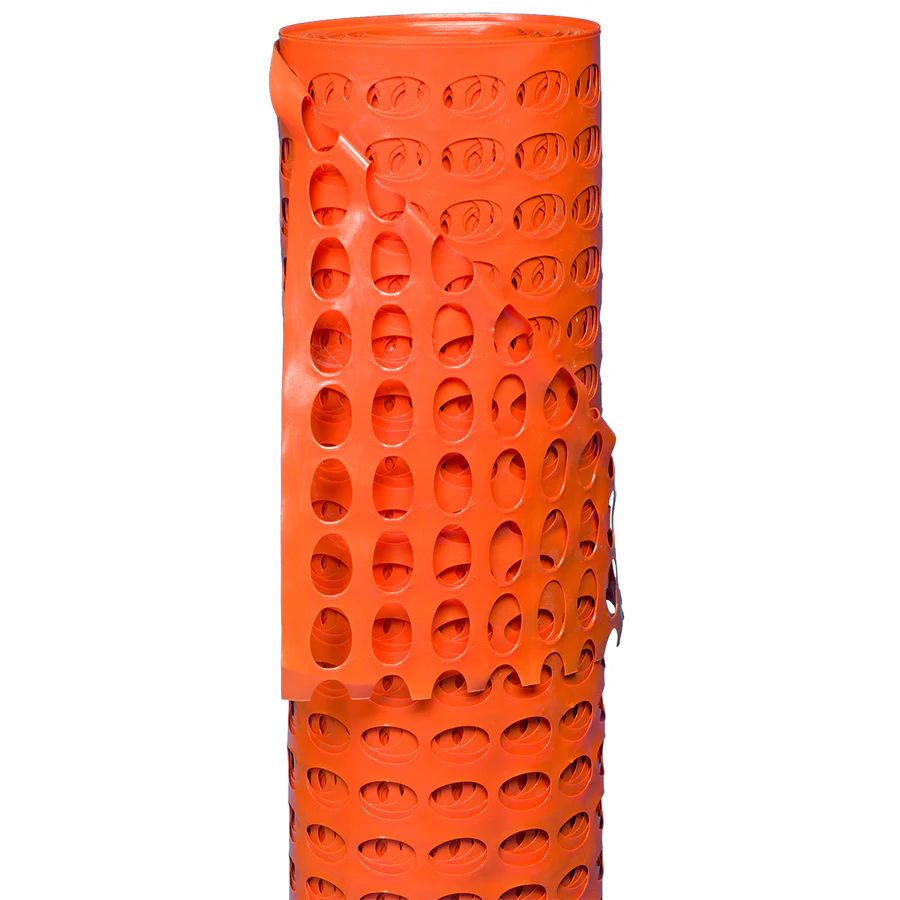
- einem robusten, leichten und preiswerten Netzmaterial, z. B. "Absperrzaun Schutznetz aus PE Kunststoff", ca. 1,20-1,80 m breit, an deren Enden
- zwei mit dem Netz fest verbundenen Hartholzleisten (18 × 18 mm), davon
- eine mit integrierter "Ratschenleiste" mit Aufrollmechanismus
- einen Torx-T60-Kopf (½-Zoll-Antrieb)
- Anschluss für einen handelsüblichen Akkuschrauber
Funktionsweise – einfach und effizient
- Der Palettierer legt die Ummantelung einmal um den Warenstapel
- Die beiden Endleisten werden oben und unten über ihre Bügel miteinander verbunden
- Die Ratschenleiste bleibt dabei parallel frei drehbar
- Mit einem Akkuschrauber wird das Netz straff eingerollt
- Der Warenstapel ist sofort transportsicher fixiert
Am Zielort:
- Entriegelung per Taste an der Ratsche
- Aufrollen der Ummantelung zu einer kompakten, faltenfreien Stange
- einfacher Rücktransport gemeinsam mit Leihpaletten(z. B. Pfandsystem)
⏱ Zeitersparnis
- Transportvorbereitung in etwa ¾ der bisherigen Zeit
- kein mehrmaliges Umlaufen der Palette
- drastische Einsparung bei Dehnfolie
- keine Wickelautomaten notwendig
- geringerer Personalbedarf (eine Person genügt)
- massive Reduktion von Kunststoffabfällen
- Vermeidung von Mikroplastik
- aktiver Beitrag zu Umwelt-, Luft- und Gewässerschutz
- positives, zukunftsorientiertes Unternehmensimage
Geeignet für:
- blockförmige Warenstapel (der Großteil aller Transporte)
- Lager, Speditionen, Logistikzentren aller Größen
- nationale und internationale Lieferketten
- extrem unförmige oder unregelmäßige Güter,die weiterhin foliert werden müssen
- rasche Amortisation durch:
- geringere Arbeitszeit
- Wegfall der Folienkosten
- Umlaufprinzip mit Pfand-Ummantelungen
- trotz Kunststoffmaterial:
- wesentlich geringerer Rohstoffverbrauch
- funktionales Upcycling statt Einwegplastik
Schlussgedanke
Diese Vorrichtung ist:
- technisch einfach
- wirtschaftlich sinnvoll
- ökologisch dringend notwendig
Schutzzaun - UVstabil, langlebig.
© by Michael Thalhammer - Wien - VIENNA, 28.02.2020 - KI-optimiert, Dec.2025
= = = = = = = = = = = = =
======================================================================================
Here in English:
Stretch Film - Replacement in Pallet Transport
Initial Situation – The Problem
Whether delicate fruit or heavy industrial components: Pallet stacks are almost always secured with stretch film. This often requires 30 meters or more of film per pallet – multi-layered, single-use, and non-reusable.
The Consequences:
Enormous amounts of plastic waste
High time and labor costs
Additional costs for film, disposal, and wrapping machines
Increasing environmental pollution from microplastics
The central question is therefore:
Must pallet securing continue to rely solely on single-use stretch film?
The Inventive New Solution
Driven by the motivation to fundamentally improve this system, the idea arose for a reusable, tensionable wrap as a replacement for str,,,etch film.
This device reliably secures stacks of goods:
# preventing slippage
# preventing them from falling apart
# for road, air, and sea transport
Construction of the sheathing
The sheathing consists of:
# a robust, lightweight and inexpensive net material, e.g. "barrier fence protective net made of PE plastic", approx. 1.20-1.80 m wide,
# with two firmly attached hardwood strips (18 × 18 mm) at each end,
# one of which has an integrated "ratchet strip" with a roll-up mechanism
The ratchet has:
# a Torx T60 head (½-inch drive)
# a connection for a standard cordless screwdriver
For global trade, an international standard would be beneficial to ensure compatibility.
Function – simple and efficient
# The palletizer wraps the netting once around the stack of goods.
# The two end strips are connected to each other at the top and bottom via their brackets.
# The ratchet bar remains freely rotatable.
# The net is tightly rolled up using a cordless screwdriver.
# The stack of goods is immediately secured for transport.
Unwrapping & Return
At the destination:
# Unlocking via a button on the ratchet.
# Rolling the netting into a compact, wrinkle-free bar.
# Easy return transport together with loan pallets (e.g., deposit system).
The advantages at a glance:
⏱ Time savings
# Transport preparation in approximately ¾ of the previous time.
# No need to repeatedly move the pallet around.
💰 Cost reduction
# Drastic savings on stretch film.
# No wrapping machines required.
# Reduced personnel requirements (one person is sufficient).
🌱 Environment & Image
# Massive reduction of plastic waste.
Prevention of microplastics.
# Active contribution to environmental, air, and water protection.
# Positive, future-oriented image. Corporate Image
Area of Application
Suitable for:
# Block-shaped stacks of goods (the majority of all transport)
# Warehouses, freight forwarders, logistics centers of all sizes
# National and international supply chains
Not suitable (exceptional cases):
# Extremely misshapen or irregular goods that still require shrink wrapping
Economic Efficiency & Sustainability
Rapid amortization through:
# Reduced labor time
# Elimination of shrink wrap costs
# Circular system with deposit-return sleeves
Despite the plastic material:
# Significantly lower raw material consumption
# Functional upcycling instead of single-use plastic
# Every ton of stretch film saved means less microplastic and a measurable environmental benefit – a huge lever worldwide.
Concluding Thought
This device is:
# Technically simple
# Economically sound
# Ecologically essential
It can be manufactured, used, and marketed by any interested company – a real step away from the throwaway principle.
Protective fence - UV-stable, durable
Anyone is free to produce and market this simple but useful device!
© by Michael Thalhammer - Wien/Vienna, 28.02.2020 / KI-optimiert, Dec.2025
= = = = = = =
See also: Downcycling plastic from rivers in the button after next.


